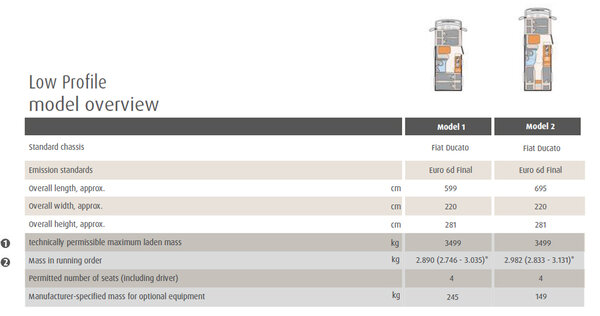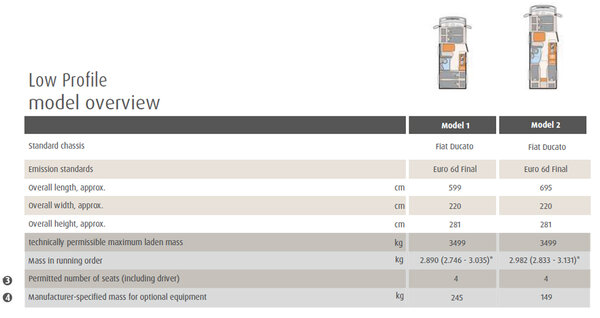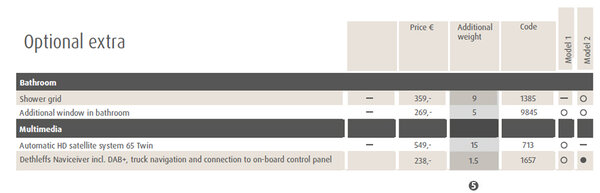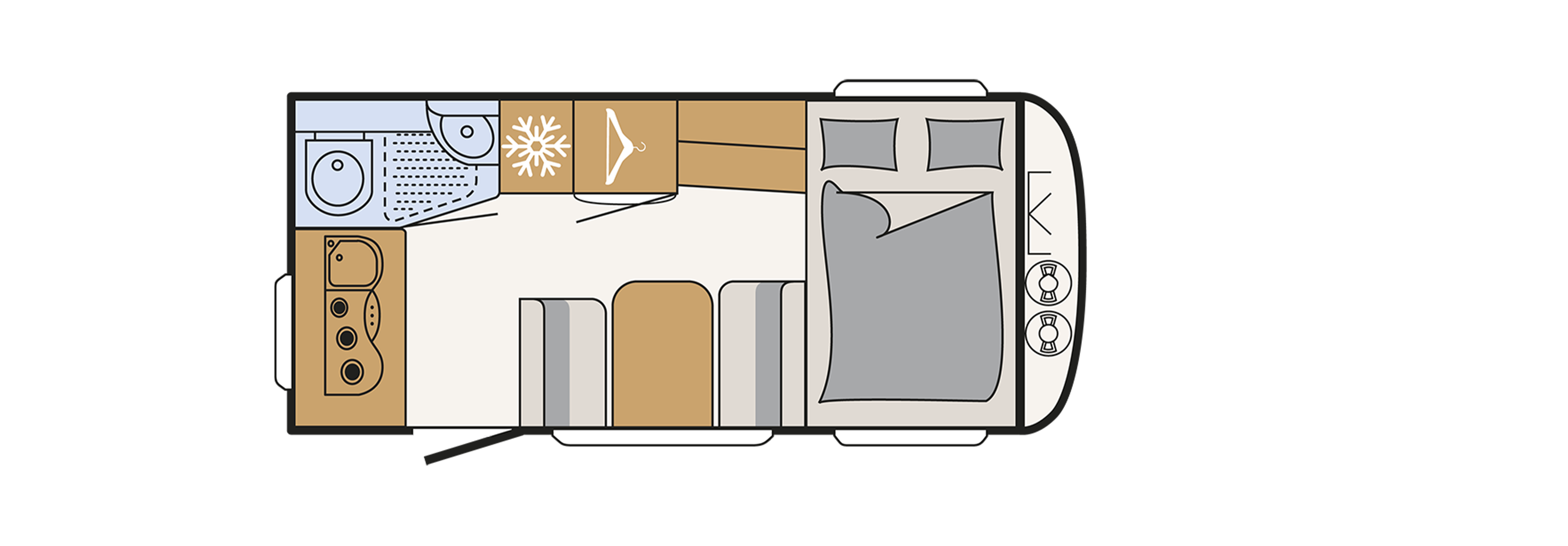
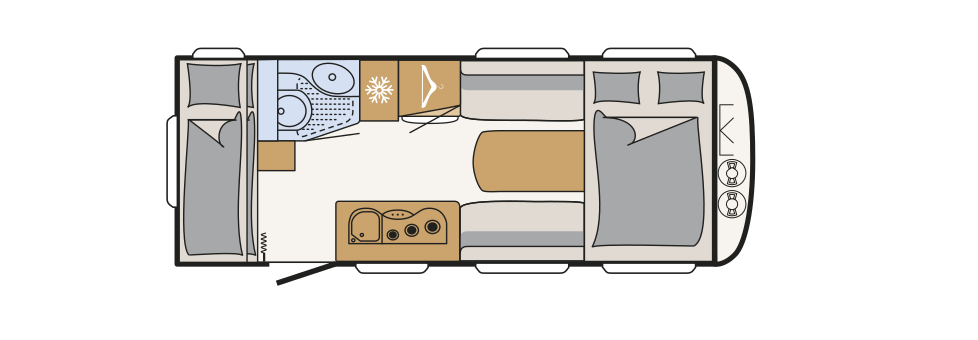
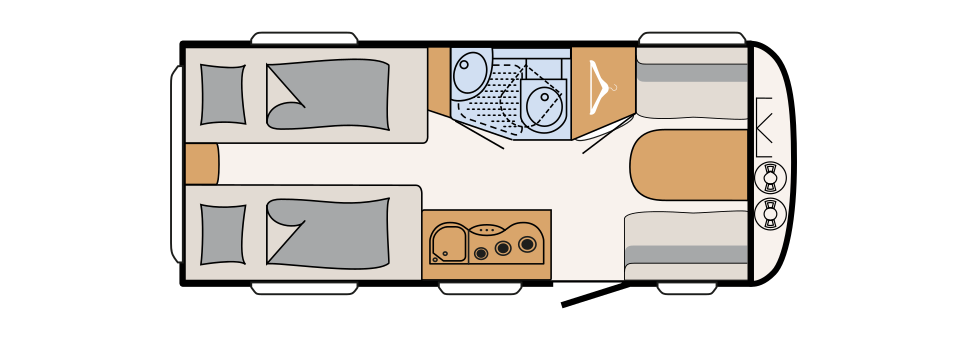
- Length
- 675 cm
- Width
- 213 cm
- Height
- 263 cm
- Sleeping berths max.
- 3
- Price


Living in the c'joy
-

Multifunctional
In most cases, the seating lounge can be transformed into a comfortable berth in just a few simple steps. Especially in summer – when most people prefer to sit outside their vehicle anyway – the seating lounge can simply be left in its bed configuration.
(460 LE | Kapan) -
Veranda feeling
Numerous surrounding windows ensure the seating lounges are bathed in natural light. And when all the windows are open, it almost feels like sitting outside on a veranda – with a pleasant breeze, even on the hottest days. There are plenty of shelves with space for all the essentials you like to keep within easy reach. The seating lounge can be converted into a sleeping area or an extra berth in just a few simple steps.
(460 LE)


Dimensions

1
2
3
4
c’joy 460 LE
1
Length
675 cm
2
Height
263 cm
3
Width
213 cm
4
Headroom
198 cm
Weight
| Electrical installation |
|---|
| Standard equipment |
| Compact power distribution unit with 230V safety device and 12V fuse box in wardrobe incl. powerful 340W transformer |
| CEE external output socket for 230V on-board electrics |
| 12 V power supply throughout vehicle |
| Awning light 12V |
| Optional equipment |
| Additional lighting through LED spotlights |
| USB port for spotlight bar |
| Heating |
|---|
| Standard equipment |
| Gas heating S 3004 with automatic ignition |
| Optional equipment |
| Ultraheat additional heating for S 3004, electric 220 V |
| Fan 12V for S 3004 |
| Hot air system |
| Water supply |
|---|
| Standard equipment |
| Electric water supply |
| Fresh water canister 12 l |
| Optional equipment |
| Fresh water tank 44 l |
| Mobile 22 l waste water tank |
| Hot water supply |
| Shower equipment with shower fittings and curtain |

Article number
2897504
Mattress topper single bed

Article number
3444600
Kitchen Roll Holder

Article number
3416002
Universal Storage Shelf

Article number
2897492
Fitted sheet single bed

Article number
3447393
SCU/SIU Smart Sensor water tank level indicator

Article number
3756532
Set of 3 hooks for rail- black

Article number
3756548
Storage shelf - black

Article number
3623004
Mount for Gas Indicator Smart Sensor

Article number
3713423
Storage tray

Article number
3683772
Retrofittable multifunctional rail

Article number
3387301
Storage tray - silver

Article number
3447392
SCU/SIU Smart Sensor Temperature

Article number
3447389
SCU/SIU Smart Sensor Contact

Article number
3447384
SCU/SIU Smart Sensor tyre pressure

Article number
3447380
SIU Smart Sensor drawbar load indicator

Article number
3447374
SCU/SIU Smart Sensor gas indicator

Article number
3569554
SIU base unit incl. leveling and voltage

Article number
2947227
Set of 2 wheel trims 14"

Article number
3683760
Retrofittable multifunctional rail

Article number
3162090
Paper roll holder

Article number
3047938
Storage shelf

Article number
3162088