c´joy 420 QSH

C´JOY
C´JOY / c´joy 420 QSH
Length
625 cm
Width
213 cm
Height
263 cm
Sleeping berths max.
3
Price

Layout 420 QSH

One of the narrowest caravans in its class, measuring just 2.13 m wide
Less than 7 m total length
High payload with a gross vehicle weight of 1,100 kg
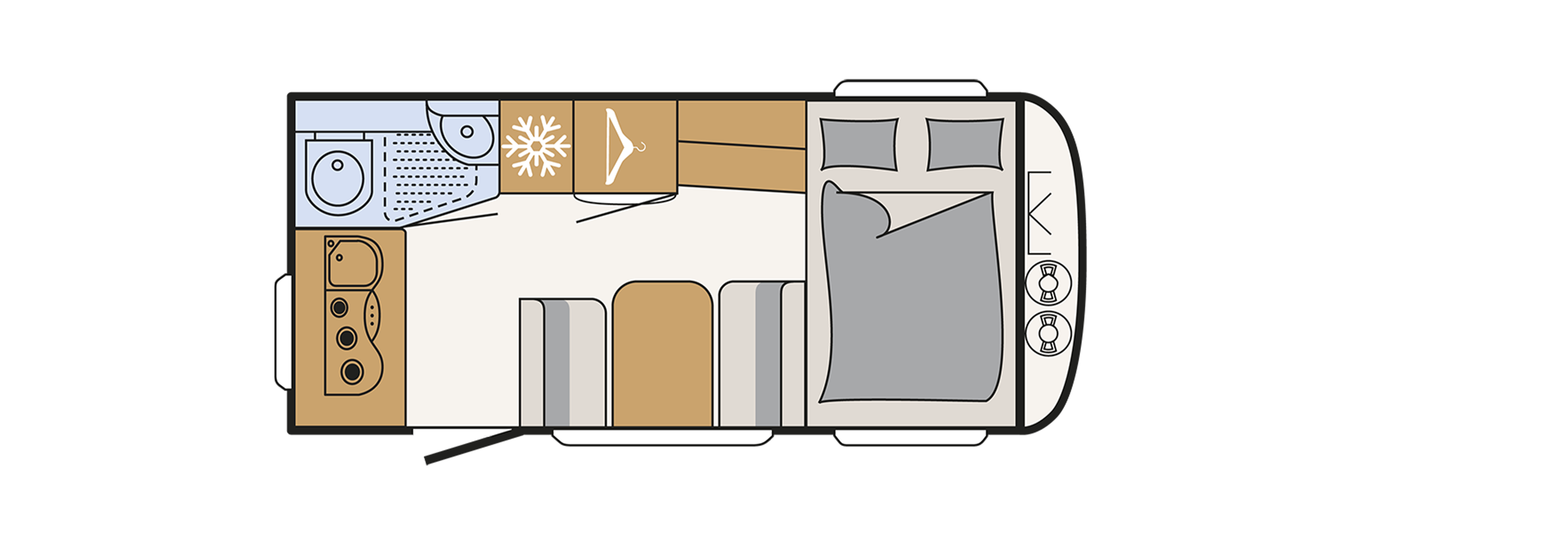
Thanks to the rear kitchen, you can cook undisturbed while the living area remains free for all residents
131.5 l refrigerator including 15 l freezer compartment as standard
Dethleffs Connect – ‘SIU-Ready’, i.e. wiring for connecting the SIU control unit is already installed, SIU control unit and additional sensors available via Dethleffs original accessories
One of the narrowest caravans in its class, measuring just 2.13 m wide

Exterior View

One of the narrowest caravans in its class, measuring just 2.13 m wide
Dethleffs Connect – ‘SIU-Ready’, i.e. wiring for connecting the SIU control unit is already installed, SIU control unit and additional sensors available via Dethleffs original accessories
One of the narrowest caravans in its class, measuring just 2.13 m wide

Living in the C'JOY

  • Large front window as standard

    All c’joy models come with a large front window as standard. It opens extra wide to let in even more natural light and fresh air. Like all windows, it includes an integrated blackout blind and fly screen.

  • Sweet dreams!

    All fixed single and double beds are fitted with 7-zone cold foam mattresses and wooden slatted bed frames as standard

  • Freshen up in no time

    All c’joy models come with fully equipped bathrooms, including a toilet, sink, mirrored surfaces and plenty of storage space. In other words, everything you need to freshen up for the day ahead

  • Keep things fresh

    Many models include a large 131.5-litre compressor fridge with a 15-litre freezer

    (480 QLK)

Interior Design

  • Upholstery
Timor
  • Wood décor
Tindari Bora

Dimensions

1
2
3
4

c´joy 420 QSH

1 Length 625 cm
2 Height 263 cm
3 Width 213 cm
4 Headroom 198 cm
Electrical installation
Standard equipment
Compact power distribution unit with 230V safety device and 12V fuse box in wardrobe incl. powerful 340W transformer
CEE external output socket for 230V on-board electrics
12 V power supply throughout vehicle
Awning light 12V
Optional equipment
Additional lighting through LED spotlights
USB port for spotlight bar
Heating
Standard equipment
Gas heating S 3004 with automatic ignition
Optional equipment
Ultraheat additional heating for S 3004, electric 220 V
Fan 12V for S 3004
Hot air system
Water supply
Standard equipment
Electric water supply
Fresh water canister 12 l
Optional equipment
Fresh water tank 44 l
Mobile 22 l waste water tank
Hot water supply
Shower equipment with shower fittings and curtain

Downloads

More vehicles from the C'JOY series

0 Results
Filter
  • Sleeping berths
  • Bed types
  • Length
  • Number of seats

Important information regarding the selection of your caravan

When buying a motorhome, camper van or urban vehicle (hereafter: motorhome), it is particularly important to choose the right layout and an appealing design. In addition, weight also plays an essential role. Family, friends, optional equipment, accessories and baggage – space must be available for all of these. At the same time, there are legal and technical limits to the configuration and load. Every motorhome is designed for a certain weight, which may not be exceeded during driving. For motorhome buyers, this raises the question: How should I configure my vehicle to accommodate passengers, baggage and accessories according to my needs without the vehicle exceeding this maximum weight? In order to make this decision easier for you, we provide you below with a few tips that are particularly important when selecting your vehicle from our portfolio:

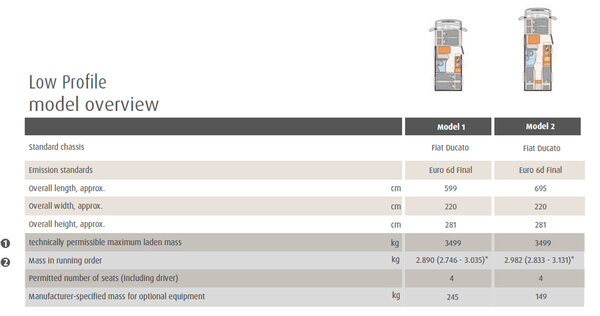
1. The technically permissible maximum laden mass…

… is a value set by the manufacturer which the vehicle may not exceed. Dethleffs specifies a layout-related upper limit for the vehicle, which can vary from layout to layout (e.g. 3,500 kg, 4,400 kg). You can find the corresponding specification for each layout in the technical data.


2. The mass in running order…

... consists – to put it simply – of the basic vehicle with standard equipment plus a standard weight of 75 kg for the driver. It is legally permissible and possible for the mass in running order of your vehicle to deviate from the nominal value stated in the sales documents. The permissible tolerance is ± 5 %. The permissible range in kilograms is given in brackets after the mass in running order. In order to provide you with full transparency regarding possible weight deviations, Dethleffs weighs each vehicle at the end of the line and informs your trade partner of your vehicle's weighing result for forwarding to you.

Detailed explanations on the subject of mass in running order can be found in the “Legal Information” section.


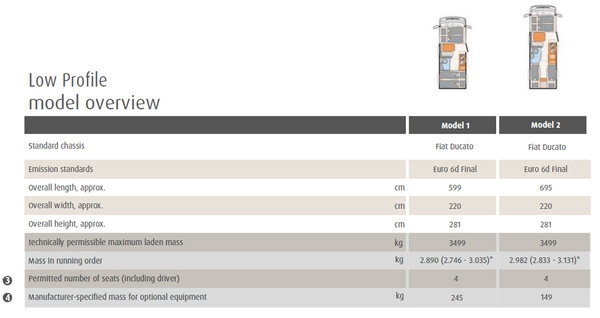
3. The permitted number of seats (including driver)…

… is determined by the manufacturer in what is referred to as the type-approval procedure. This results in what is referred to as the mass of the passengers. For this, a standard weight of 75 kg per passenger (without driver) is calculated. 

Detailed explanations on the subject of mass of the passengers can be found in the “Legal Information” section.


4. The manufacturer-specified mass for optional equipment…

… is a value set by Dethleffs per layout for the maximum mass of optional equipment that can be ordered. This limit is intended to ensure that the minimum pay-mass, i.e. the legally prescribed free mass for baggage and retrofitted accessories, is actually available for the vehicle load capacity of the vehicles delivered by Dethleffs. If, in exceptional cases, the weighing at the end of the line nevertheless shows that the actual load capacity falls short of the minimum pay-mass due to a permissible weight deviation, we will check together with your trade partner and you whether we should, for example, increase the load capacity of the vehicle, reduce the number of seats or remove optional equipment before delivering the vehicle. 

Detailed explanations on the subject of the effects of the tolerances on the minimum pay-mass and the payload can be found in the “Legal Information” section.


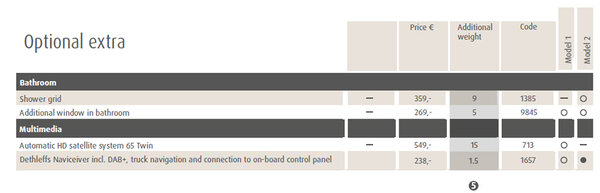
5. The additional weight of optional equipment and packages...

... increases the actual mass of the vehicle (= mass in running order plus selected optional equipment) and reduces the pay-mass. The specified value shows the additional weight compared to the standard equipment of the respective layout. The total weight of the selected packages and optional equipment must not exceed the manufacturer-specified mass for optional equipment.